


Newsletter: Beltane 2026


Jump to a section:
Beltane’s Fire, May Day’s Flame
At the threshold of May, when the earth produces greenery in earnest and the air itself seems to be imbued with promise, we arrive at a convergence that is anything but accidental. Beltane—ancient, pastoral, ecstatic—meets May Day—industrial, political, defiant. One is marked by bonfires leaping skyward; the other by bodies in the street, voices raised in solidarity. Both, at their core, are concerned with the same elemental truth: transformation through fire.
Historically, Beltane emerges from the Gaelic world as a liminal festival, a hinge between seasons. It is not merely the celebration of fertility—though that is its most commonly invoked symbol—but of protection and purification. Livestock were driven between twin fires to guard against disease; households rekindled their hearth flames from communal bonfires, binding individual survival to collective well-being. Fire, here, is not decorative. It is an instrument of survival, a force that burns away what threatens life and sanctifies what remains.
May Day, as it has come to be known in its modern political form, also arises from fire—though of a different kind. Its origins are often traced to the labor struggles of the late 19th century, most notably the Haymarket affair in Chicago, where a rally for the eight-hour workday turned violent and deadly. The “flame” of May Day is not only metaphorical; it is the incendiary spark of collective outrage against exploitation, the refusal to accept conditions that degrade human dignity. Where Beltane’s fires purified the herd, May Day’s flames have historically sought to purify systems—to burn away injustice, inequity, and the calcified structures of power that perpetuate them.
That these two observances share a date is more than calendrical coincidence. It invites us—especially those who walk pagan or witchcraft-informed paths—to consider how cycles of nature and cycles of human struggle are intertwined. Fire, in both contexts, becomes a teacher: it destroys, yes, but only in service of renewal. It demands discernment. What must be burned? What must be preserved? And who decides?
This year, those questions feel less abstract. The United States finds itself in a moment of pronounced tension: allegations of corruption at the highest levels of government, widening economic disparities, and a populace increasingly divided yet simultaneously restless. Public trust—once treated as a given—is now openly contested. Protest movements, labor organizing, and mutual aid networks have surged in response, echoing earlier eras of upheaval while adapting to the peculiarities of our digital age.
For practitioners attuned to the symbolic language of the seasons, this convergence of Beltane and May Day offers a potent ritual and philosophical framework. If Beltane asks us to tend the fire that sustains life, May Day asks us to tend the fire that defends it. The distinction is subtle but critical. One is inward and communal; the other outward and confrontational. Yet both are necessary.
There is, of course, a temptation—especially within certain strands of contemporary spirituality—to retreat into the purely personal. To light a candle, set an intention, and call it transformation. There is value in these acts; they anchor us, remind us of our agency, and cultivate presence. But Beltane’s historical context resists such narrowing. The communal bonfire was not optional. It was a shared infrastructure of survival. Likewise, the labor movements commemorated on May Day were not abstract exercises in ideology; they were material struggles for time, safety, and dignity.
To honor Beltane fully, then, is to resist the privatization of its symbolism. The fire you tend is not yours alone. It is part of a larger ecology—social, political, and environmental. And to acknowledge May Day is to recognize that purification is not always gentle. Sometimes, what must be burned is not a habit or a limiting belief, but a system that thrives on those very limitations.
What lessons, then, might a witch or pagan draw from this confluence?
First, that purification is an active process. Fire does not passively transform; it requires fuel, oxygen, and intention. In practical terms, this might mean examining the ways in which our own practices intersect with broader systems. Where do we source our materials? Whose labor makes our tools and comforts possible? What economies—visible and invisible—do we participate in, and at what cost to others? These are not questions traditionally framed as “magical,” but they are deeply aligned with the ethic of conscious living that undergirds many earth-based traditions.

Second, that community is not an aesthetic but a practice. The Beltane fires were communal because survival demanded it. In a modern context, community might look like supporting local mutual aid efforts, engaging in labor advocacy, or simply cultivating networks of care that extend beyond immediate circles. Magic, if it is to be more than symbolic, must be relational. It must move through and between people, not merely reside within them.
Third, that righteous anger has its place. Fire is not always serene. It crackles, roars, consumes. The labor movements associated with May Day remind us that anger, when channeled, can be a catalyst for change. This is not an endorsement of indiscriminate destruction, but a recognition that complacency is itself a kind of decay. To feel outrage at injustice is not a failure of spiritual equanimity; it is evidence of moral awareness. The question is how that awareness is directed.
Fourth, that renewal is cyclical, not linear. Both Beltane and May Day are annual observances, returning us to these themes again and again. The work of purification—whether personal or collective—is never complete. Systems re-entrench; habits resurface. Fire must be tended continuously, lest it either burn out or rage uncontrolled. This cyclical understanding can be a source of resilience. Setbacks are not endpoints but phases within a larger process.
There is also, it must be said, a certain irony in celebrating fire in a world increasingly shaped by its excess—wildfires intensified by climate change, industrial processes that overheat the planet, rhetoric that inflames rather than illuminates. Here, too, the symbolism invites discernment. Not all fire is sacred. Some is extractive, destructive without purpose, fueled by greed rather than necessity. The challenge is to distinguish between the fires that purify and those that merely consume.
In this sense, Beltane and May Day together offer a kind of ethical calibration. They ask us to consider not only whatwe burn, but why and to what end. A bonfire that brings a community together, that marks a shared commitment to care and renewal, differs fundamentally from a blaze that clears land for exploitation or a metaphorical fire that reduces complex social issues to spectacle.
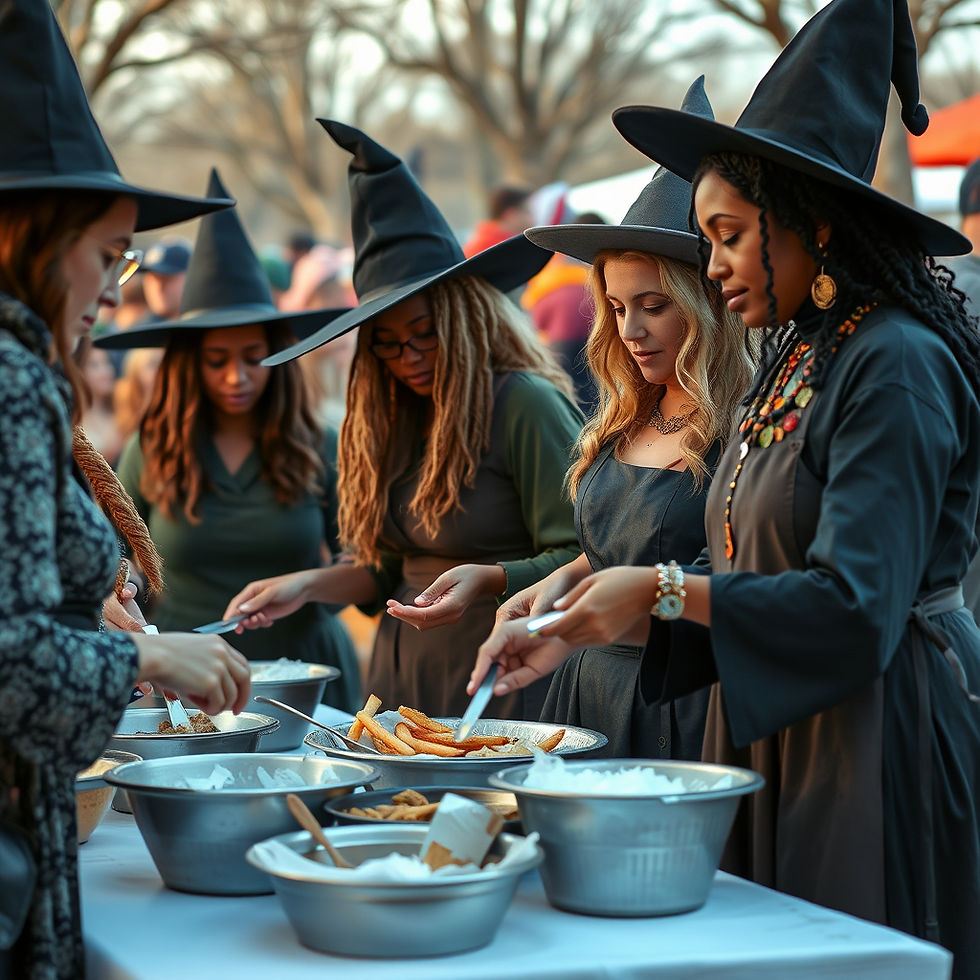
For those crafting ritual this season, there is rich terrain to explore. One might, for instance, create a two-part observance: an evening fire ritual that names and releases what no longer serves—habits, beliefs, or even complicity in unjust systems—followed by a daytime act of engagement, such as participating in a local May Day event, donating to labor organizations, or educating oneself on workers’ rights. The magic, in this framing, is not confined to the circle but extends into the world, where its effects can be measured not only in feeling but in change.
Language, too, can be a tool of fire. Incantations need not be archaic to be effective. A clearly articulated demand for justice, a well-reasoned critique of policy, a conversation that shifts perspective—these are forms of verbal alchemy. They reshape reality, however incrementally. To speak with intention is, in its own way, to strike a spark.
It is worth noting that both Beltane and May Day have, at various points, been suppressed or sanitized. The former, through the gradual erosion of indigenous practices under colonial and religious pressures; the latter, through political efforts to diminish its radical roots in favor of more palatable narratives of springtime festivity. To reclaim these observances in their fuller complexity is itself an act of resistance. It refuses the reduction of rich, multifaceted traditions into harmless curiosities.
And so we return to the fire.
Not as a quaint symbol, but as a living force—dangerous, necessary, transformative. It asks something of us. It asks that we choose, deliberately, what we are willing to see burned away. It asks that we step, perhaps uncomfortably, into the heat of collective life, where our individual practices intersect with broader struggles.
Beltane’s flames leap high, illuminating the fertile fields and the bodies that tend them. May Day’s fire burns in the streets, in the halls of power, in the quiet resolve of those who refuse to accept less than dignity. Together, they form a kind of double helix of meaning, spiraling through time to meet us here, now, in a moment that demands both reflection and action.
To celebrate this convergence is not merely to mark a date on the calendar. It is to engage in a practice of ongoing purification—of self, of community, of the systems we inhabit. It is to recognize that renewal is not given but made, often through effort that is as collective as it is personal.
Tend your fire well.
A May Day Working
This Beltane, you are invited to step beyond the circle and into the current of a larger fire—the living flame of collective action. This ritual does not begin with casting a circle, but with recognizing that you already stand within one: the shared field of labor, breath, and interdependence that binds us all.
Begin at dawn, or whenever you rise. Before speaking, place your hand over your heart and name, silently or aloud, what you are withdrawing your energy from today—be it exploitative labor, unjust systems, or the quiet acceptance of either. This is your first act of purification.
Dress with intention. Choose something that reminds you of your power—red for fire, green for growth, black for the fertile void from which change emerges. As you prepare, consider whose labor made each item possible. Offer a moment of gratitude; then, a commitment to stand in solidarity with those whose work is too often unseen.
If you are able, participate in the May Day general strike: refrain from work, join a demonstration, support a labor action, or contribute to mutual aid. Let your absence from the usual systems be a spark—small, perhaps, but joined with others, capable of becoming flame.
Throughout the day, return to your breath. Each inhale: I gather power. Each exhale: I release what must burn.
At dusk, light a candle. Not to contain the fire, but to remember that it continues—beyond you, because of you.
Shadow Work: Tending the Inner Fire

Where in your life have you grown comfortable with what should unsettle you? Take time to reflect on the systems—personal, professional, or societal—in which you participate but rarely question. What do you benefit from, even as others may be harmed? Sit with any discomfort that arises; this is the heat of your inner fire, asking for honesty rather than avoidance.
Consider, too: where has your anger been dulled, redirected, or silenced? What would it mean to honor that anger as a signal rather than a flaw?
Write about what, within yourself, is ready to be burned away—and what responsibility remains after the ashes settle.
Southern Hemisphere Shout Out: Samhain

As our southern hemisphere friends welcome Samhain, we wish you all a bountiful harvest season! If you would like to see how we celebrated Samhain here in the north (during our “turn”) and get some ideas for journaling, activities and more, you can check out our past Samhain newsletter on our website!
Special Thanks
Thanks, as always, to our Patreon contributors. To Steve D. and Anonymous - you are A-tier for your over and above contributions. Your support helps keep all of our little operations churning and we are eternally grateful to you for helping that happen.
Calendar
01 MAY Beltane
May Day
General Strike
FULL Flower Moon (12:23 pm CST)
16 MAY New Moon (3:01 pm CST)
31 MAY FULL Blue Moon (3:45 am CST)
14 JUNE New Moon (9:54 pm CST)
21 JUNE Litha
Midsummer


Comments